
Choose the invoice guide that matches what you need to do.
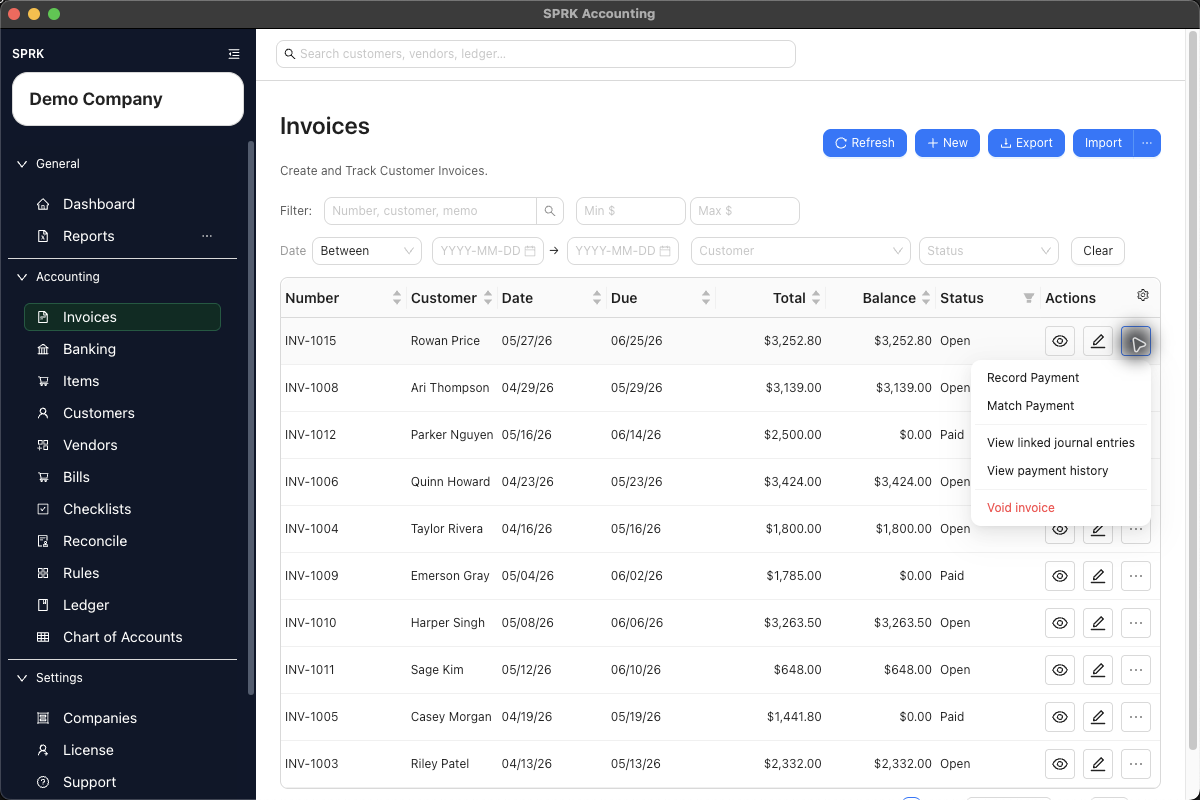
Start here
If you are entering a new invoice, go directly to Create an invoice. Use the choices below for other invoice work.
Choose an invoice task
| Goal | Use | Check First |
|---|---|---|
| Enter a new customer invoice | Create invoices | Customer, Receive to, due date, line accounts, and invoice status |
| Review or update an existing invoice | Review and edit invoices | Invoice status, balance, payment history, and posted-save prompts |
| Print a customer-facing invoice | Print invoices | Invoice details, company header, sales tax, SKU, quantity/price, dates, and totals |
| Import grouped invoice rows from a file | Import invoices | Customers, line accounts, duplicate invoice numbers, and Receive to routing |
| Record or match money received | Receive invoice payments | Open balance, Deposit to, payment amount, and whether the bank row should be matched |
| Void or correct a posted invoice | Void or correct invoices | Active payments, linked journals, invoice status, balance, and reversal date |
| Understand invoice posting consequences | Understand invoice general ledger impact | Whether the invoice is draft, open, paid-now, paid, voided, or corrected |
Before You Commit
- Confirm the active company before creating or changing invoice records.
- Review whether
Receive toshould use an Accounts Receivable control account or a cash, bank, or credit-card settlement account. - Review line-level
Income accountvalues before saving or importing. - Check customer terms and due date before sending the invoice to a customer.
- Review payment history before voiding or changing an invoice with activity.
- Treat posted-save prompts, void confirmation, and paid-now routing as accounting-sensitive choices.
What Not To Assume
Paidstatus is not the same thing as recording or matching a payment.Default income accountis not a substitute for reviewing line-level income accounts.- Printed invoice output is customer-facing; it does not include payment history or ledger review detail.
- Voiding an invoice is not deleting it. A supported void preserves the invoice and reversal history.
- Customer defaults and company defaults seed values; they do not remove the need to review each invoice.
Practice and examples
- Practice reference: receivables-customer-item-invoice-payment.csv